The Dentist and the Debutante

I’ve spent most of my life living inside a pair of headphones. In my radio days, my ears weren't just tools; they were finely tuned instruments. I was trained to hear the punch —that specific, mid-80s compression designed to make a song explode out of a dashboard speaker and grab a listener by the collar.
In 1984, Bryan Adams wasn’t just a singer; he was the gold standard of that frequency. He was the "Big Sound."
But one wintery night in January 2013, at Raleigh’s Memorial Auditorium, the Big Sound went quiet. It was an extension of his Bare Bones tour. No backing band, no massive studio reverb, no safety net. Just Bryan, his guitar, a piano, and an audience that felt like it was sitting in his living room. When a performer is that exposed, the evening stops being a concert and starts being an event. To this day, it's one of the best shows I've ever seen.
I’ve been thinking about that night a lot lately because of a recent find for the Groove Den: a 1984 Hannover pressing of Reckless.
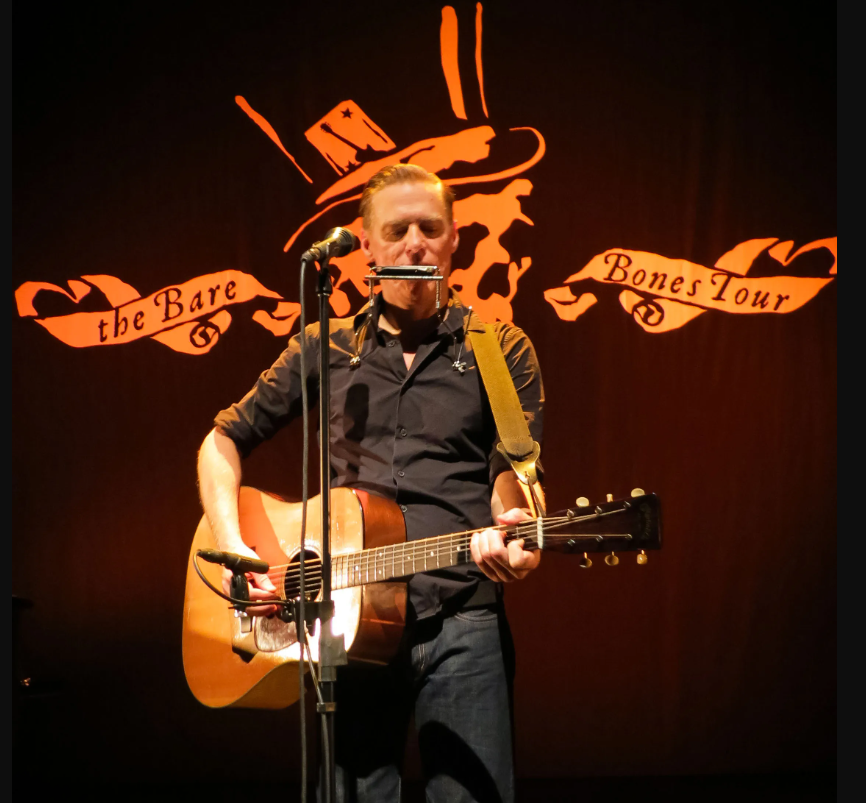
At one point during the show, Bryan singled out a young woman near the center of the theatre. Her name was Suze (short for Suzy, she clarified). Most of us had settled into our seats, but as Bryan began serenading her, Suze was left standing in the spotlight alone. You could see the transition in real-time: the initial "Oh my god" thrill giving way to that self-conscious, "What do I do with my hands?" awkwardness. Suze was also a little on the...to coin a phrase from George Costanza…”bosomy” side. She started doing a sort of nervous, self-hugging rhythmic swaying—the kind of dance you only do when a rock star is looking right at you and 2,500 people are watching you react.
The song and the cringe ended, she sat down, and we all moved on. Or so I thought.
Two days later, I’m tilted back in a chair at my dentist's office for a routine cleaning. My dentist, a North Raleigh guy I’ve seen for years, asks what’s new. I mention the Bryan Adams show. Without missing a beat—before he even picked up a tool—he looked at me and laughed:"How about that Suze!" It was one of those perfect moments where the world shrinks down to the size of a record spindle. We spent the next ten minutes dissecting the show instead of my need to do a better job flossing.
That serendipity is exactly what makes Reckless such a powerhouse. When I was behind the board in my radio days, we treated this album like an infinite resource. It spawned six Top 15 singles—a feat that, at the time, had only been matched by Michael Jackson’s Thriller.
Every time I’d cue up 'Heaven' or 'It's Only Love' for the afternoon drive, I knew I was spinning radio gold. Interestingly, 'Run to You'—the track that practically defines the Adams Sound — was originally written for Blue Öyster Cult. They turned it down, and as the saying goes, their loss was our collective gain. To be honest? I can't even wrap my head around a BÖC version. There’s a specific, desperate urgency in that opening riff that is Bryan Adams. It’s his DNA on wax.
The full circle closed recently when Lorraine and I were in Germany for our river cruise. She has a crate-digger’s eye, and we dipped in to Hitsville in Dusseldorf, she spotted a near-perfect copy of Reckless. I almost passed it by until I saw in fine print on the jacket: "Printed in West Germany."
Holding that 1984 pressing took me straight back to my Army days, stationed in a country that was still divided by a wall, during the same years this very piece of wax was being pressed at the legendary PolyGram plant in Hannover. That factory was the NASA of vinyl, known for high-fidelity pressings that were designed to compete with the then-fledgling CD format.
Bringing that pressing home to the Groove Den was an unexpected thrill. This is another one of those albums that I didn't know I needed. Those Hannover pressings are famous for their dynamic range. On "Run to You," it has a clarity that digital streams just can't touch. It has air. It moves real air, just like those old floor-standing consoles we grew up with.
As I’m putting the finishing touches on this post, 'Summer of ’69' is spinning on the platter. I get to that line we all know—'Man, those were the best days of my life'—and I have to pause.
Back when I was in the Army or a DJ in a high-octane radio booth, I probably would have agreed. Those days were loud, fast, and fun. But as the needle tracks through Reckless, I’m not so sure. People ask why I still hunt for these old records. It’s because music has a funny way of connecting us to memories or people. This piece of wax connects the dots between the Army, on the radio in the 90s, and a laugh I shared with my dentist in 2013. It’s a lot of history to pack into a 12-inch circle, but when the room fills with the Big Sound, it all feels like it’s happening right now.

Maybe the 'best days' aren't stuck in 1969 or 1984. Maybe they’re right here, in the Groove Den, where the past and the present sound the same.
Reckless (1984)
The Production Powerhouse:
Engineered & Mixed by: Bob Clearmountain. The King of the Mix, he gave the album its signature radio-ready punch.
The Songwriting Duo: Adams & Jim Vallance. They wrote the entire album in Vallance’s basement studio.
The Master: Cut by Bob Ludwig at Masterdisk.
The Bare Bones Truth:
"Heaven": Almost left off the album because Adams thought it was "too soft." It became his first #1 single.
The Guest List: Features a legendary duet with Tina Turner on "It's Only Love" and Journey’s Steve Smith on drums for "Heaven."
The Radio Stats:

Comments