The Vice: Neon Nights and Steve McQueen

There’s a time for the highway, windows down, cranking Grunge or Heavy Metal until the speakers protest. But then there’s the Blue Hour in the Groove Den—that time of night when the high-decibel swagger of my youth gives way to something more elegant.
I find myself gravitating toward the highly produced gems, the records that don't just play; they shine. It’s the musical equivalent of moving from a draft beer to a 20-year-old scotch. I'm talking about the masterpieces of pop & rock precision, and right now, the needle is dropping on the sophisticated brilliance of Prefab Sprout.
Don't get me wrong—I still leave the metal for the highway. When I’m out cruising in the Nomad I usually play 60’s & 70’s rock. Commuting for work is podcasts or Sirius The Boneyard, The Spectrum or Alt Nation for music discovery.
But something happened last summer. I was cruising home from the office in Durham, a late afternoon run through the piney woods of Northern Wake County and across Falls Lake. The windows were down, the air was just starting to turn, and Steve Winwood’s "Talking Back to the Night" came on The Spectrum. I hadn’t heard this song years!
Suddenly, I wasn't in North Carolina anymore.
In my head, I was in a Michael Mann movie. I had just finished an all-night stakeout in a humid South Florida summer, and I was driving home as the sun started to bleed over the Atlantic. I started laughing to myself, but the feeling stuck. By the time I pulled into the driveway, I had invented a new radio format just for me: Vice Rock. I sat that night and curated an amazing playlist: The Vice in my Apple Music.

Vice Rock isn’t just 80's nostalgia or classic alternative. It’s the neon-drenched playlist meant for late-night drives to nowhere. It’s Phil Collins' "In the Air Tonight," Joe Jackson’s "Stepping Out," and Sade’s "Smooth Operator." But one of the low key jewels of that playlist? A track most people either forgot or never knew: "Bonny" by Prefab Sprout.
Fast forward to last week. I was making the rounds to my regional offices and found myself back at Alley Cat Records in Greenville, NC. I was doing the deep bin dive when I saw it: a VG+ copy of Two Wheels Good. I couldn't believe I found this album. It's so random and it wasn't just any copy; it was a Pitman Pressing.

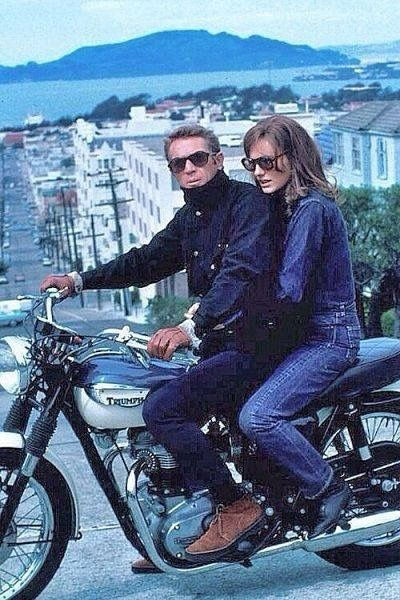
For the uninitiated, Prefab Sprout is the ultimate smart band. This album—originally titled Steve McQueen in the UK before the actor’s estate threatened a lawsuit—is a lyrical marvel. It was produced by Thomas Dolby; yeah that Thomas Dolby - who was blinded by science, he acted less like a producer and more like a curator. Dolby carefully sifted through dozens of Paddy McAloon’s songs, hand-picking the ones that felt most like art and stripping away the mid-80s clutter to give the music life.
Paddy McAloon himself was a bit of a musical enigma—a reclusive genius often called the 'Gershwin of the North.' He wasn't trying to write a catchy hook for the charts; he was trying to write the Great American Songbook from a rainy bedroom in England. On this Pitman pressing, you can hear that obsession in every note. It’s not just pop; it’s carefully crafted melody and metaphor.
Back in my days hosting The K-Lite Café at 93.7 FM in Houston, every now and then we’d slip "When Love Breaks Down" into the smooth jazz sets. It sounded like a million bucks then, and on my set-up, it sounds even better. The Pitman plant in New Jersey was known for its high-quality control, and on a record this sophisticated, you need that clean surface.
Tracks like "Appetite" and "Bonny" aren't just songs; they are textures. They belong in the Groove Den’s high-production wing. Parker was home over Easter, he joined me in the Den for a listen of Two Wheels Good. He was blown away asking who it was and where did I find this?! This is an album I never owned in my original collection. Every time I find a "new" classic like this, I feel like I’m taking another step in healing the broken heart of throwing away my original crates decades ago.
I might not be on a stakeout with Crocket & Tubbs, but when the needle drops on Two Wheels Good, the Vice Rock light stays on all night.
Retro Spin Liner Notes: Two Wheels Good (1985)
The Production Powerhouse:
The Curator: Thomas Dolby. Fresh off his "Science" success, Dolby acted as a musical surgeon. He hand-picked the best of Paddy McAloon’s 50+demos.
The Smart Sound: Recorded using a Fairlight CMI (one of the first digital sampling workstations). Dolby used it to layer lush, atmospheric textures that made the album sound like it cost a million dollars.
The Pitman Pressing: My copy features the P matrix code in the dead wax, stamped at the legendary Pitman, NJ plant. It was mastered at Sterling Sound in NYC, ensuring every delicate synth pad and acoustic lick stays crisp and quiet.
The Players:
Paddy McAloon: The reclusive mastermind behind the lyrics and melodies. He wasn't chasing hits; he was chasing perfection.
Wendy Smith: Her ethereal, breathy backing vocals provide the neon glow that defines the Sprout’s sound.
Martin McAloon: Paddy’s brother on bass. His melodic, fluid lines provide the Vice Rock pulse.
Neil Conti: Drums. He provided a jazz-inflected, restrained rhythm that allowed the production to breathe.
The Radio Stats:
When Love Breaks Down (Peak #42, Billboard Mainstream Rock)
Appetite – A massive "turntable hit" for DJs who appreciated the high-production sheen, though it remained a stealth gem on the US charts.
The Groove Den Verdict: While it only reached #178 on the Billboard 200, it holds up well against some of the well known classics. It’s a masterclass in pop precision that feels more like a cinematic experience than a standard record.


Comments